
The term "pharmaceutical" refers to anything related to the...
Drug discovery and development is the complex and multi-step process of creating new...
18th International Conference & Exhibition on
Pharmacology, Drug Discovery & Clinical Trials
18th International Conference
and Exhibition on Pharmacology, Drug Discovery, Pharmacotherapy
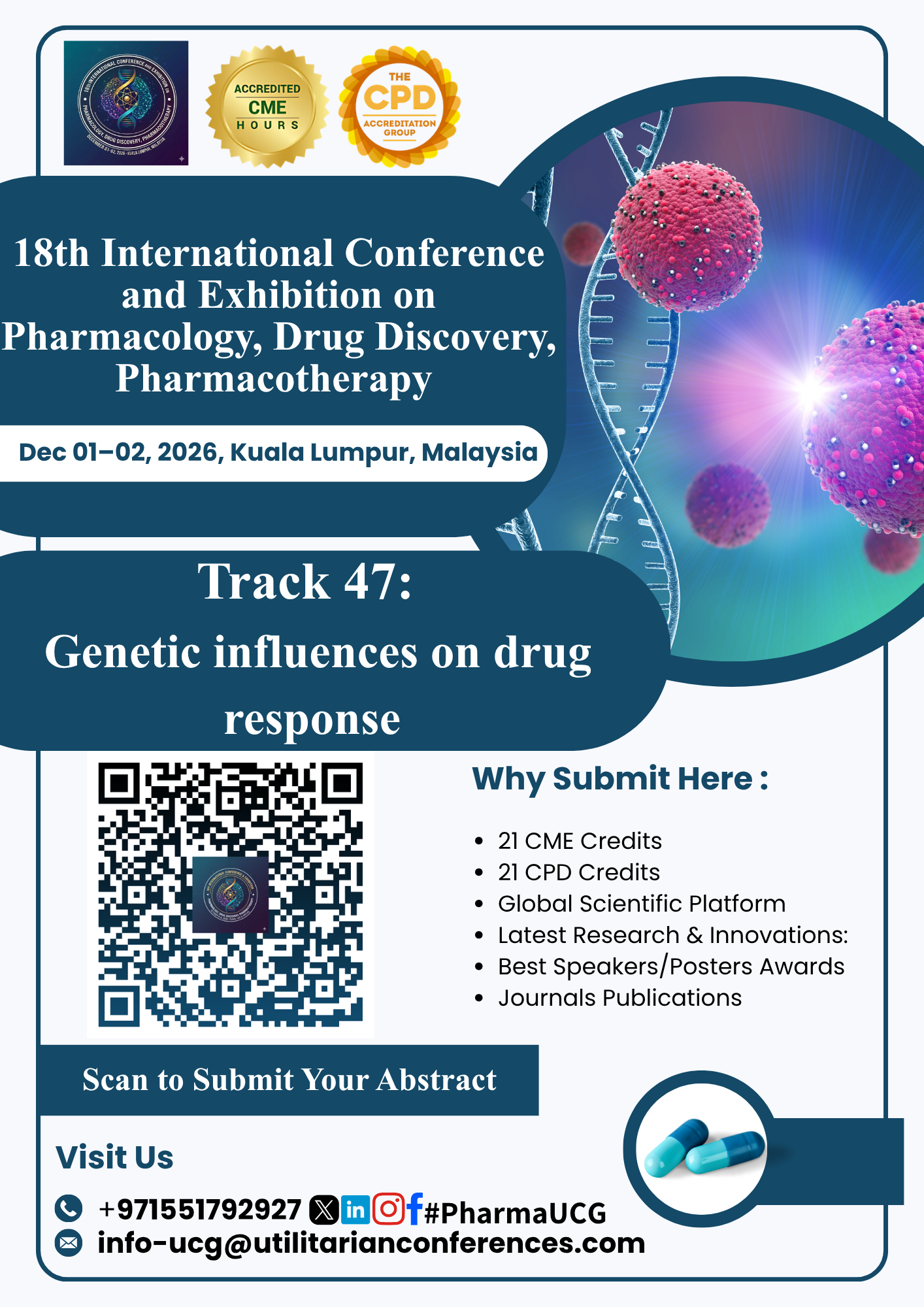
Genetic Influences on Drug Response—often referred to as pharmacogenetics or pharmacogenomics—describe
how an individual’s genetic makeup affects their response to medications.
Variations in genes can influence how drugs are absorbed, distributed,
metabolized, and eliminated, as well as how they interact with their biological
targets.
Genetic
differences may determine whether a drug is highly effective, partially
effective, or ineffective, and can also increase the risk of adverse drug
reactions or toxicity. For example, variations in drug-metabolizing enzymes
(such as CYP450 enzymes), drug transporters, or receptor proteins can lead to
faster or slower drug metabolism, requiring dose adjustments or alternative
therapies.
Understanding
genetic influences on drug response supports the development of personalized
medicine, enabling healthcare professionals to select the most appropriate drug
and dosage for each patient. This approach improves treatment efficacy,
enhances patient safety, reduces trial-and-error prescribing, and contributes
to more cost-effective healthcare outcomes.